20-02
FAA Airframe Aileron Fabrication Project
Overview
An airframe training project combining aluminum fabrication, fiberglass layup, structural riveting and documented repairs.
Objective
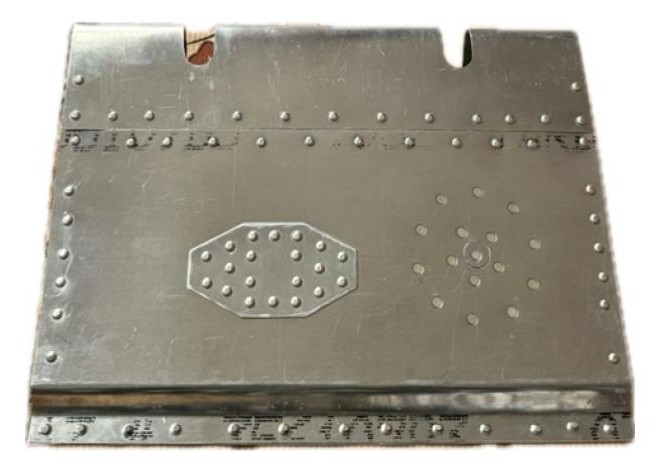
The goal of the project was to design and construct a structurally sound aileron using both aluminum and composite materials, following FAA standards used in airframe mechanic training. After fabricating the control surface, I was required to create intentional damage and then perform FAA approved repairs, including full documentation and a completed FAA Form 337 (Major Repair and Alteration).
Engineering constraints
Aluminum and composite construction; intentional damage followed by documented repairs; rivet pitch, edge distance and rivet-count calculations; and a completed FAA Form 337.
My contributions
To demonstrate repair competency, I intentionally damaged both the aluminum and composite skins and performed the following FAA-approved repair types:
- Flush patch repair (aluminum skin)
- Surface patch repair
- Scarf and honeycomb-core composite repairs
For each repair, I calculated rivet pitch, edge distance, and total rivet count to ensure FAA compliance.
I also:
- Dimpled and countersunk skins to install flush rivets
- Practiced rivet removal and replacement
- Created hand drawn repair diagrams
- Completed a detailed FAA Form 337 documenting the repair
Design and fabrication process
Fabrication Process
Metal Components
- Cut steel hinge blanks on a bandsaw, hand filed edges smooth, drilled mounting holes, and formed bends using a box-and-pan brake.
- Cut aluminum skins on a sheet metal shear and formed curvature on the brake.
- Shaped ribs from annealed aluminum, hand hammering around a custom jig for accuracy.
- Performed autoclave heat treatment followed by a water quench to harden the rib components.
Composite Components
- Produced a fiberglass composite layup for the flat bottom skin, ensuring proper fiber orientation and resin ratio.
Assembly
- Used Clecos to maintain alignment while drilling the aileron structure.
- Installed solid rivets using pneumatic riveting equipment to assemble the aileron per FAA fabrication standards.
Results
The completed aileron passed all dimensional, structural, and alignment inspections, demonstrating correct material handling, precision assembly, and proper execution of aluminum and composite repair techniques.
This project gave me extensive hands on experience with:
- Aircraft grade sheet metal forming
- Composite layup and repair
- Structural riveting
- Heat treatment and hardening
- FAA technical documentation and repair certification
It strengthened my understanding of both traditional and modern aerospace manufacturing and repair processes, reflecting the exact skills used daily by licensed airframe mechanics.
Skills and tools
Aircraft Sheet-Metal Forming, Composite Layup & Repair, Heat Treatment, Technical Drawing, Pneumatic Riveting, FAA Compliance & Inspection, Structural Fabrication, Precision Assembly